
Are you missing a row or arch of teeth? At Lighthouse Family Dentistry, we provide patients with dentures and partials in Annapolis, MD. Dentures are a restorative dental solution that makes it easier for patients to speak, bite, and chew.
With dentures, patients can enjoy a better quality of life as well as improve the look of their smiles. Dr. E. Taylor Meiser can provide patients with traditional or implant-secured dentures.
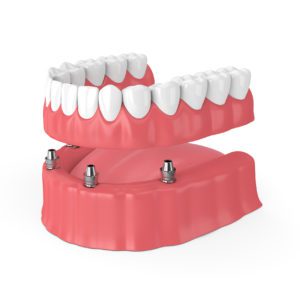
Partial and Full Dentures in Annapolis, MD
Dentures are full or partial. Partial dentures replace several missing teeth, often rows of consecutive missing teeth, while full dentures replace the upper and lower arch of teeth. Traditional dentures are removable and held in place by adhesive or snaps. However, removable dentures do not fully restore the bite for patients with missing teeth.
Using dental implants, we can secure a set of partial or full dentures. Dental implants are surgically inserted into the jawbone. Once they heal, we attach the denture. Implant-secured partial and full dentures make it easier for patients to speak, eat, and enjoy their lives without restrictions.
Treatment with Dentures
Before treatment, Dr. Meiser ensures that patients have healthy gums and, if applicable, healthy natural teeth. Patients who are receiving dentures secured by implants need enough jawbone tissue to secure the implant post. Dr. Meiser recommends bone grafting before implant treatment for patients who need it.
To begin denture treatment, Dr. Meiser will take digital impressions of the teeth and gums. These impressions are used to fabricate the denture prosthetic. Dr. Meiser will then surgically insert dental implants for patients receiving implant-secured dentures.
Implant patients will need to wait 3 to 6 months for the implant posts to heal. Once the implants are fully fused to the jawbone, Dr. Meiser will attach the denture. Although patients who receive implant-secured dentures have a longer treatment time, their results will function just like natural teeth.
Implant-Supported Dentures
If you are seeking a more secure, comfortable, and permanent solution, implant-supported dentures may be the transformative option you’ve been looking for.
The core difference lies in the foundation. Traditional dentures rest directly on your gums, relying on adhesive pastes or natural suction for stability. Over time, as the jawbone naturally shrinks due to tooth loss, even well-fitted dentures can become loose, causing embarrassing slips and making speaking or eating certain foods difficult.
Implant-supported dentures, however, are anchored to your jaw. Small, biocompatible titanium posts are surgically placed to act as artificial tooth roots. Your custom-crafted denture then securely attaches to these implants. This connection creates a dramatic improvement in your daily life. You can enjoy the foods you love without fear or hesitation.
Your speech becomes clear and confident, free from the worry of your teeth shifting. Most importantly, the implants stimulate your jawbone, just like natural roots, which helps preserve your facial structure and prevent the sunken appearance that can occur with bone loss.
The benefits extend beyond function to profound comfort and convenience. Without a bulky plastic covering the roof of your mouth, your sense of taste is improved, and the denture feels more natural. There’s no need for messy adhesives; you simply snap your denture in place each morning with confidence. For many patients, this stability restores not just their smile, but their overall quality of life and self-assurance.
Dentures FAQs
Dentures are the main solution to replace full arches of missing teeth. Read the answers to these frequently asked patient questions below.
Who is a good candidate for dentures?
Dentures are suitable for individuals who have lost multiple teeth due to decay, gum disease, or injury. Patients should have healthy gums and adequate jawbone structure, although preparatory treatments may help improve eligibility.
Dentures are often recommended for patients seeking a cost-effective tooth replacement option. A dental evaluation is necessary to determine whether dentures or another restorative solution is most appropriate. Overall health and daily habits are also considered.
How long do dentures last?
Dentures typically last between five and ten years with proper care. Over time, natural changes in the jawbone and gums can affect their fit. Normal wear and tear may also impact comfort and appearance. Regular dental visits allow your dentist to monitor your fit and recommend adjustments or replacements. Maintaining good oral hygiene can help extend the lifespan of your dentures.
How long does it take to get dentures?
The denture process usually takes several weeks to a few months, depending on the type of denture. It involves consultations, impressions, fittings, and adjustments. Some patients may require tooth extractions or gum healing before final placement. Immediate dentures may be placed on the same day as extractions, but they often require later adjustments. Your dentist will outline a personalized treatment timeline.
Are dentures comfortable to wear?
Dentures are designed for comfort, but there is an adjustment period. Initially, patients may experience soreness, increased saliva, or minor irritation. These sensations typically subside as the mouth adapts. Properly fitted dentures should feel secure and comfortable during daily activities. Follow-up visits help ensure optimal fit and function.
Can I sleep with my dentures in?
Dentists typically recommend removing dentures at night. Taking them out allows gum tissues to rest and reduces the risk of irritation or infection. Soaking dentures overnight keeps them moist and maintains their shape. Sleeping without dentures also improves oral circulation. Your dentist may provide specific guidance based on your situation.
Will dentures affect my speech?
Some patients experience temporary speech changes when first wearing dentures. Certain words may feel difficult to pronounce initially. With practice and time, speech usually returns to normal. Reading aloud can help speed up adjustment. Proper fit plays a key role in minimizing speech issues.
Are dentures painful?
Dentures should not cause ongoing pain when properly fitted. Some discomfort is normal during the initial adjustment phase. Persistent soreness or irritation may indicate a need for adjustment. Dentists can modify the denture to relieve pressure points. Prompt communication helps prevent complications.
Does insurance cover dentures?
Many dental insurance plans offer partial coverage for dentures. Coverage varies depending on plan details and annual limits. Some plans may require waiting periods. Your dental office can help verify benefits and provide cost estimates. Financing options may also be available.
What should I do if my dentures feel loose?
Loose dentures should be evaluated by a dentist promptly. Bone and gum changes often cause looseness. Relining or rebasing may improve fit. In some cases, replacement is necessary. Avoid using excessive adhesive as a long-term solution.
Do I still need dental visits with dentures?
Yes, routine dental visits remain important. Dentists monitor gum health, denture fit, and oral tissues. Early detection of issues prevents complications. Professional cleanings may still be recommended. Ongoing care ensures comfort and longevity.
Receive Your New Denture Today
Do you want a fuller, more balanced smile? Call our dental office for a new denture today at 410-324-7287. You may also request a dental appointment with our team on our website.