
Are you missing several teeth? Restore your smile with dental bridge treatment in Annapolis, MD. Bridges are dental prosthetics that use natural teeth or dental implants to restore lost or missing rows of teeth. They are very durable and are considered to be a permanent tooth restoration.
At Lighthouse Family Dentistry, Dr. E. Taylor Meiser and his team provide restorative dental care to patients with missing teeth. They help patients bridge the gaps between lost teeth for a more natural, uniform smile. Our office’s goal is always to preserve as much of your natural teeth as possible.
What Are Removeable and Fixed Bridges?
Dental bridges replace missing teeth, but they come in different types. Fixed bridges are cemented in place by your dentist. They are non-removable and supported by teeth or dental implants. These bridges feel natural and can last 10 to 15 or more years.
Removable bridges can be removed for cleaning and need to be taken out at night. These bridges often use metal clasps that hook onto natural teeth. While they are more affordable than fixed options, removable bridges are less stable than fixed bridges.
Traditional vs. Implant-Supported Bridges
A traditional bridge uses the support of teeth on either side of a missing tooth gap. A dental pontic covers the missing tooth socket and is held in place by the natural teeth. Dental crowns cover the teeth that help support the bridge to restore your smile.
The dental pontic does not benefit the underlying gum tissue or jaw bone. A traditional bridge may also mean a dentist has to remove a portion of the tooth enamel from healthy teeth.
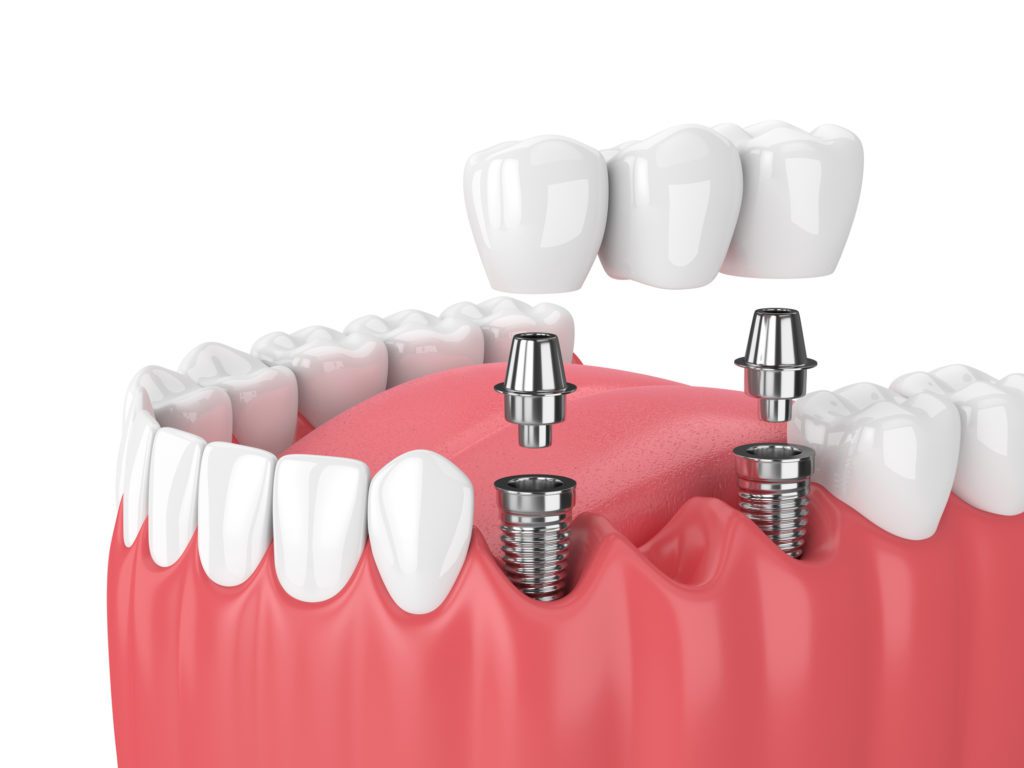
Patients receive more support when implants secure their dental bridge. Dental implant posts are made of high-quality titanium.
The titanium implant post acts as a new tooth root. After a surgeon places the post in the mouth, it fuses with the jaw bone. We can place a single implant if you have a missing tooth without the need to prepare the adjacent teeth.
Am I a Candidate for a Dental Bridge?
You might be a good candidate for a dental bridge if:
- You’re missing one or more teeth in a row
- You have strong teeth that surround your tooth gap
- You have healthy gums and no active gum disease
We may not recommend a bridge for you if you have many missing teeth or missing teeth in different areas of your mouth.
Some patients may also wonder if they can get implants to support a bridge. We will recommend implant treatment if you have enough jawbone and good oral health. If you have jaw bone loss, we will recommend bone grafting to build up healthy tissue. We can also treat tooth or gum infections before treatment.
Dental Bridge Treatment in Annapolis, MD
Here’s what to expect when you get your bridge:
Traditional Bridge
Dr. Meiser will begin treatment by taking dental impressions. These impressions are required for both traditional and implant-secured dental bridges. We also ensure that we match your bridge to the exact color, shape, and size of your natural teeth to ensure that they blend in seamlessly with the rest of your smile.
For traditional bridges, Dr. Meiser will first etch into the natural enamel of the adjacent teeth. This ensures that the dental crown fits properly. Next, Dr. Meiser sends his dental impressions of the teeth and gums to a dental lab, where technicians create the crowns and pontic. When the bridge is complete, Dr. Meiser will make sure that it fits comfortably in the mouth.
Implant Bridge
Patients who receive implant-secured bridges will have a longer treatment time. However, their restoration is permanent and more stable. After Dr. Meiser takes dental impressions, he will schedule implant surgery.
During this surgery, an oral surgeon inserts the titanium dental implant posts into the jawbone. After a healing period of 3 to 6 months, the implants fuse with the jawbone during a process called osseointegration. Then, Dr. Meiser will attach an abutment to the implant.
Finally, Dr. Meiser attaches the final dental bridge to the abutment and your restoration is complete. Restoring your smile with an implant-supported bridge gives patients a higher functioning restoration. It also reduces the risk of jaw bone deterioration and gum disease.
How to Care for a Dental Bridge
Whether you have a traditional bridge or an implant-supported bridge, proper care will help it last longer and keep your mouth healthy. Here’s what you need to know:
Traditional Bridge
If you have a traditional bridge, brush twice daily with a soft toothbrush. Pay extra attention where the bridge meets your gums.
You can use a floss threader or special bridge floss to clean under the false tooth. Remember to be gentle but thorough when cleaning the crowned teeth that support your bridge.
Implant-Supported Bridge
You can clean your implant bridge just like natural teeth. Brush twice daily and pay special attention to the gumline. You can also use an implant-specific floss or a water flosser to clean around the implant posts.
No matter the type of bridge, we recommend that you get professional cleanings every six months.
How Much is a Dental Bridge?
The cost of a dental bridge in Annapolis, MD can depend on the type and materials. Pretreatments like gum disease treatment or bone grafting can also add to the price.
Because implant bridges require high-quality materials and surgery, this restoration will cost more than a traditional bridge. However, implant bridges last more than traditional bridges. You may need to repair or replace traditional bridges over time. Implants ensure restorations last longer and feel more stable.
Dr. Meiser will review the estimated cost of your bridge treatment beforehand. Our office also accepts dental insurance to cover part of the treatment cost.
Dental Bridge FAQs
Dental bridges can replace one or multiple missing teeth. It’s one of the most convenient tooth replacement options. Read more below.
How does a dental bridge work?
A dental bridge fills the gap left by missing teeth by anchoring to stable support structures on either side. Traditional bridges rely on crowns placed over adjacent teeth, while implant-supported bridges attach to dental implants. Once secured, the bridge distributes biting forces evenly across the dental arch. This stabilizes your bite and restores proper oral function.
What are the different types of dental bridges?
There are several types of dental bridges, including traditional, cantilever, Maryland (resin-bonded), and implant-supported bridges. Traditional bridges are the most common and use crowns on both sides of the gap. Cantilever bridges rely on support from one adjacent tooth. Implant-supported bridges use surgically placed implants for enhanced stability and bone preservation.
Who is a good candidate for a dental bridge?
Patients missing one or more consecutive teeth with healthy adjacent teeth may be good candidates for a traditional bridge. Those with sufficient jawbone density may qualify for implant-supported options. Good oral hygiene and healthy gums are essential for long-term success. Your dentist will evaluate your bite, bone levels, and overall oral health before recommending treatment.
How long do dental bridges last?
With proper care, dental bridges can last 10–15 years or longer. Longevity depends on oral hygiene, bite forces, and regular dental checkups. Avoiding excessive pressure from habits like teeth grinding can extend their lifespan. Routine professional cleanings help protect the supporting teeth and gums.
Do dental bridges look natural?
Yes, modern dental bridges are designed to blend seamlessly with surrounding teeth. High-quality materials replicate the color, translucency, and shape of natural enamel. Skilled fabrication ensures proper contour and bite alignment. Most people will not be able to distinguish a bridge from natural teeth.
Is getting a dental bridge painful?
The procedure is performed under local anesthesia to ensure comfort. Most patients report minimal discomfort during treatment. Mild sensitivity may occur after the procedure, but it typically subsides within a few days. Your dentist will provide instructions to manage any temporary soreness.
What happens if I don’t replace a missing tooth?
Failing to replace a missing tooth can lead to shifting teeth, bite misalignment, and jawbone loss. Surrounding teeth may drift into the gap over time. This can cause difficulty chewing and increase the risk of decay. Replacing missing teeth promptly helps maintain long-term oral stability.
Are dental bridges covered by insurance?
Many dental insurance plans provide partial coverage for bridges. Coverage depends on your specific policy and the reason for tooth loss. Your dental office can help verify benefits and provide cost estimates. Financing options may also be available.
How long does it take to get a dental bridge?
Traditional bridges typically require two to three appointments over a few weeks. Implant-supported bridges require additional healing time for implant integration. The timeline varies depending on case complexity. Your dentist will outline the process before treatment begins.
Will a dental bridge affect my speech?
Most patients adapt quickly to their new bridge. Minor speech adjustments may occur initially, especially if replacing front teeth. These changes typically resolve within a short time. Proper fit ensures comfort and natural function.
Request a Dental Bridge Appointment
Do you want to replace your missing teeth with a natural-looking dental bridge? Call Lighthouse Family Dentistry today at 410-324-7287. You can also schedule a dental consultation with Dr. Meiser online.
Let us know if you have more questions about your restorative options. We will be happy to assist you.